
 Current Issue PDF
Culture
Tribal Elder loves learning
By Nicole Montesano
Smoke Signals staff writer
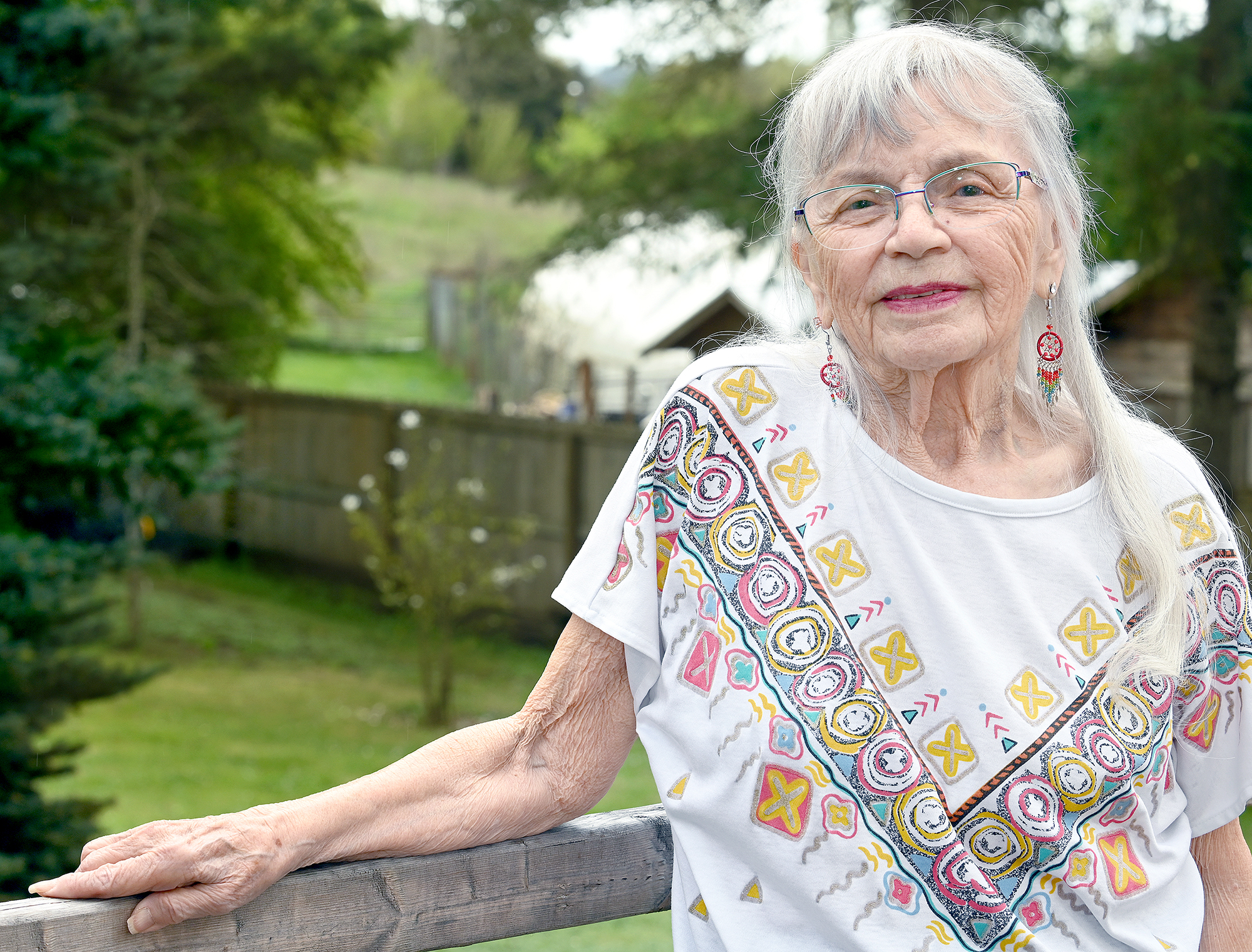
At 92, Tribal Elder Claudette Parazoo remains fascinated by the world around her. She talks delightedly about her favorite local landmarks, reminisces about the early days of the Tribe, reads about Tribal history in books bristling with place markers, plays bingo like it’s her day job and still drives to Lincoln City regularly to exercise by walking up and down escalators.
Parazoo lives in Sheridan with her daughter, Tribal Elder Kristy Summers, who works for the Tribe as a Tribal Employment Rights Office administrative assistant, and her partner, Tara Summers.
Parazoo has lived a busy life, working as a fire lookout, an accountant, a secretary and a ranch hand with her second husband, among other jobs. She bore six children – five boys and one girl – and raised 11, did exquisite beadwork and went to school every chance she got. She earned her bachelor’s degree in social science in 2002, at the age of 68.
“Education has always been part of my life,” she said.
Born April 28, 1934, Parazoo grew up in the tiny town of Chiloquin, in Klamath County and experienced decades of historic events.
Her parents met, she said, at Haskell Indian College in Kansas, now the Haskell Indian Nations University, at a time when the federal government was trying to discourage Tribal practices and culture.
“They weren’t allowed to be together at Haskell, so they went to South Dakota,” Parazoo said.
Her mother was from the Rosebud Reservation, home of the Rosebud Sioux Tribe; her father was from Oregon, a member of the Confederated Tribes of the Grand Ronde. Parazoo, who was named after her father, Claude, was born there.
Accustomed to the much milder winters of southern Oregon, Summers said, her grandfather “lasted one winter” in South Dakota, “then he packed mom and grandma into the car,” and headed for home, where five more siblings joined the family over the next few years.
Growing up in the 1930s and 40s, through the Great Depression and World War II, Parazoo was familiar with hard times.
“We were very poor,” she recalled. “We bought very little from the store. Dad was a hunter and fisherman. Mom canned what she could get. We ate out of jars – she would can stew and chili.”
Although her mother enjoyed baking, sugar was rationed during the war and could not be used as freely as it can today.
“We were having a heck of a time,” she said. “All our money, almost, went for Dad to work in the logging industry to take care of his saws.”
In 1946, when Parazoo was 12, her mother sent her, with her sister Sharon, to Chemawa Indian School in Salem. Parazoo said it still amazes her to drive through city streets that have long overtaken the farm fields and orchards she remembers.
“They were out there where the highway is now,” she said. “In the morning, we went to school and in the afternoon, we went and picked in the fields.”
She still wonders if the school made money from its students’ labor and remembers she couldn’t wait to get back on the train and go home.
“I was so homesick,” she said. “When I went home at Christmas, I told mom about going to school for half a day and she decided I was missing out on too much school. I was falling behind the other kids.”
Years later, in 1984, Parazoo applied for a scholarship from the Oregon Institute of Technology, which traced her education as part of the process. She was surprised to discover that Chemawa listed her as an escapee.
Parazoo resumed school in Chiloquin, graduating in 1952. From there, she went on to Haskell for two years, where she served as student council secretary and earned a post high school commercial diploma in 1956.
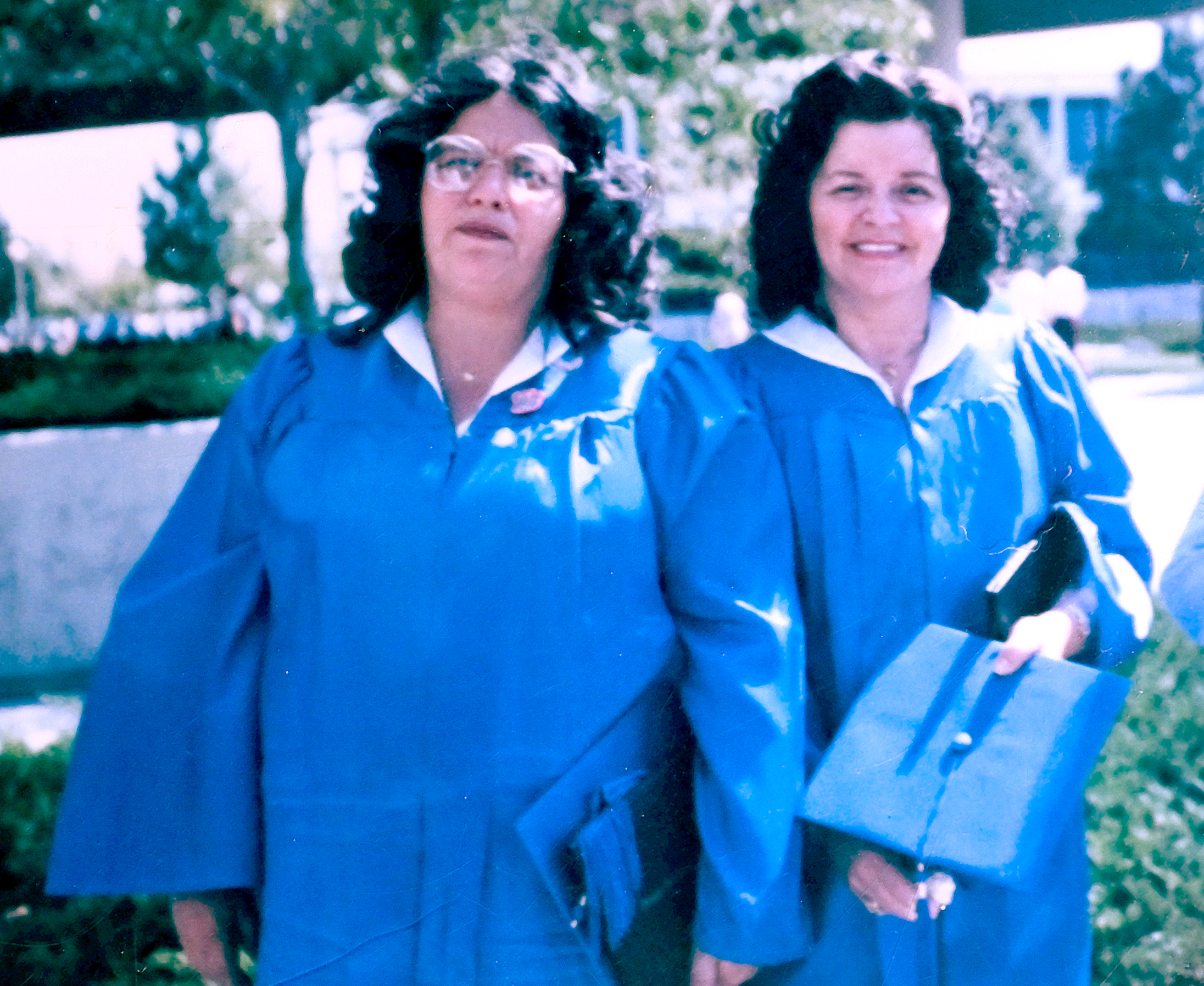
Tribal Elder Claudette Parazoo, right, and her sister, Tribal Elder Karleen Parazoo, on their graduation day from the Oregon Institute of Technology in 1984. Claudette graduated with an Associate of Applied Sciences in Secretarial Science Technology. (Contributed photo)
In the summer months, she returned home and worked as a fire lookout for the U.S. Forest Service, until a lightning strike during a memorable storm destroyed the radio in the tower she had just exited. For the next three days, she said she was without contact with the outside world.
After leaving Haskell, she took a break from school for a few decades, working and marrying, before returning to school in the 1980s and again in the late 1990s.
“Education has always been part of my life,” she said. “It got me a lot of interesting places and I met a lot of interesting people.”
One was a schoolmate from Haskell, Billy Mills (Oglala Lakota), who went on to win the Olympic gold medal for the men’s 10,000-meter run in the 1964 Tokyo Summer Olympics. He remains the only person from the Americas to win the race. In 2025, Mills visited Grand Ronde, where Parazoo spotted him and went to say hello. Summers treasures the photo of Mills and Parazoo standing together and beaming at the camera.
After graduating from Haskell, Parazoo said, she was working in Denver, Colorado, when a friend suggested she apply for a job with the Bureau of Indian Affairs in Washington state. After getting the job, she said, “I rode the Greyhound bus out there and she met me. She had an apartment and we shared the rent.”
When a colleague invited her to dinner with his family, she met his son Kenny Williams, (Tulalip), who became her first husband.
“His mother made clam chowder,” she said. “I wasn’t a fan of seafood. I grew up on antelope, deer, ducks and all those things, because my father was a hunter.”
Nonetheless, she said, “we hit it off and started dating. We got married and the next thing, I had four little boys.”
Eventually, the two parted ways and Parazoo decided it was time to move herself and the children to Klamath, where she married her second husband. Albert Summers (Coquille), who was raising five children on his own.
“He needed a cook and I needed someone to help me out,” Parazoo said.
Busy years followed. She worked for Kinglsey Air Force Base and then for the Klamath Tribes, but in 1976, “Dad moved us out to the ranch,” Summers said. “At the time, it was us five younger kids.” The couple ran cattle and raised livestock for Summers’ rodeo company.
“When I was little, all of us kids were always working,” Summers said. “Every summer we would haul hay.”
The children were raised with strong cultural connections, she noted.
“I remember it being all about the powwows and the rodeos,” Summers said.
Parazoo ran a full house in those years between her and her husband’s children.
“My older brothers Abby, Buttons, Cobby and Cousin Rocky would stay over to help dad out,” Summers said. “At times, mom would be feeding anywhere from six to a dozen people; mom just never knew who was going to show up.”
In the evenings, after a long day, Parazoo would sit at the dining room table and work on beading. Summers showed an elk skin dress decorated with exquisite beaded yellow flowers, one of the results of those evening hours of quiet artwork.
Tragically, one of Parazoo’s sons, nicknamed Canoe, walked on in 1975, at the age of 15.
Parazoo was among a contingent of Native Americans who flew to Washington D.C. for a tour of the White House in 1976 during the American Bicentennial Celebration.
“They had Indian Tribes going in and out all year long,” she said.
In the 1980s, Parazoo returned to school, attending the Oregon Institute of Technology, where she earned her Associate of Applied Sciences in Secretarial Science Technology in 1984.
She worked for the Bureau of Land Management on water issues but in 1994, when the office was moving, her bosses suggested she retire.
“It was a shock. I wasn’t ready to retire,” Parazoo said.
In 1995, she began working for the Tribe. Parazoo said she had enrolled with the Confederated Tribes of Grand Ronde after one of her brothers did. She was required first to disenroll from the Rosebud Sioux Tribe and decided to do so because she wanted to remain in Oregon.
Parazoo worked with various Tribal departments but was still interested in learning new skills, so she enrolled at Portland State University, earning her bachelor’s degree in social science in 2002. She had immensely enjoyed her capstone project, interviewing women from the state prison, and wanted to work for the Tribe in the Social Services Department. However, she said, the general manager at the time “told me I needed to get into management and I wasn’t interested in management. I was interested in social services. So, I retired. And I’ve enjoyed bingo ever since.”
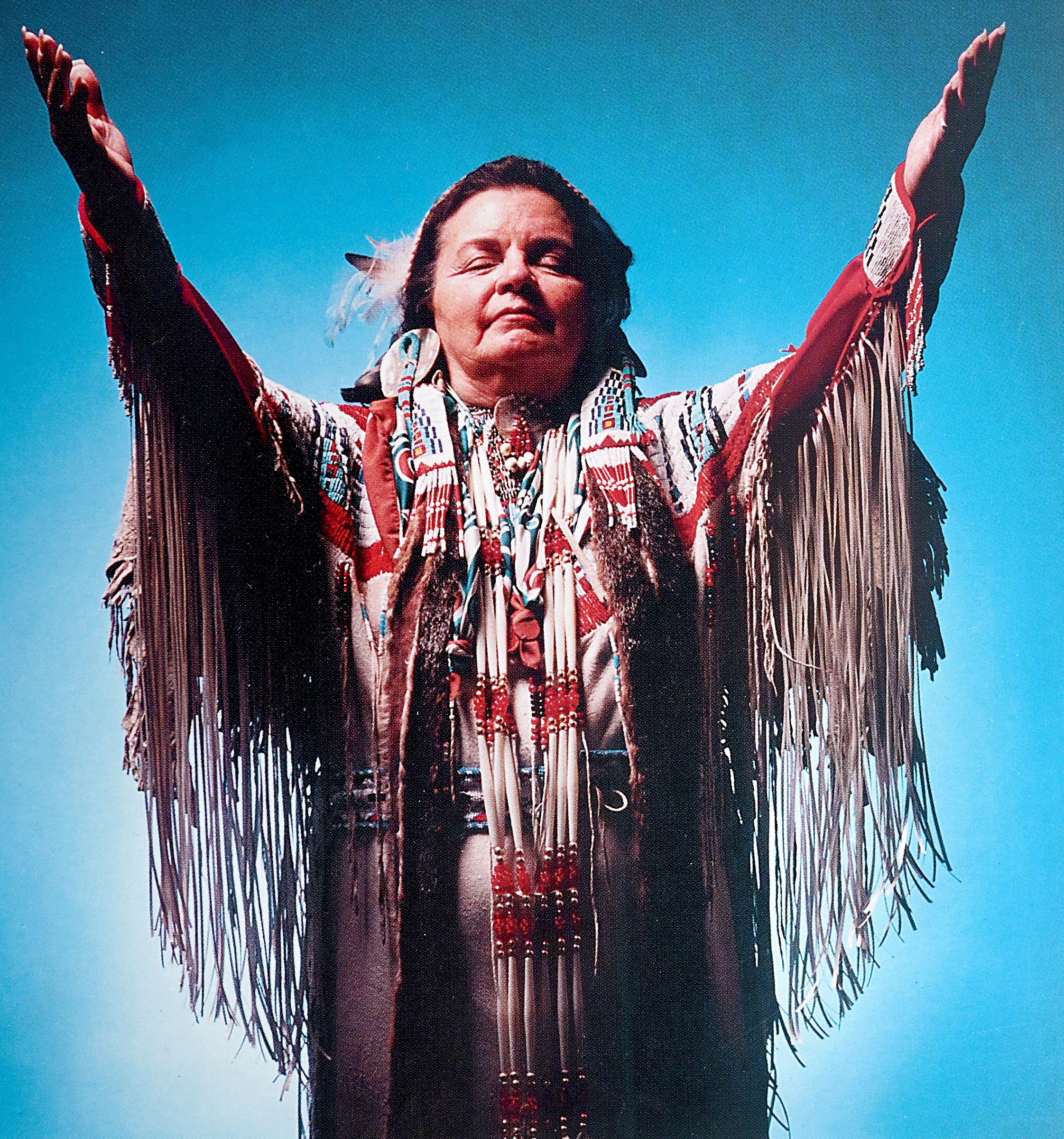
This photo of Tribal Elder Claudette Parazoo ran on the cover of the Tribe’s 1996-97 annual report. (Contributed photo)