
 Current Issue PDF
Culture
Tribal Elders visit Wapato Lake
By Nicole Montesano
Smoke Signals staff writer
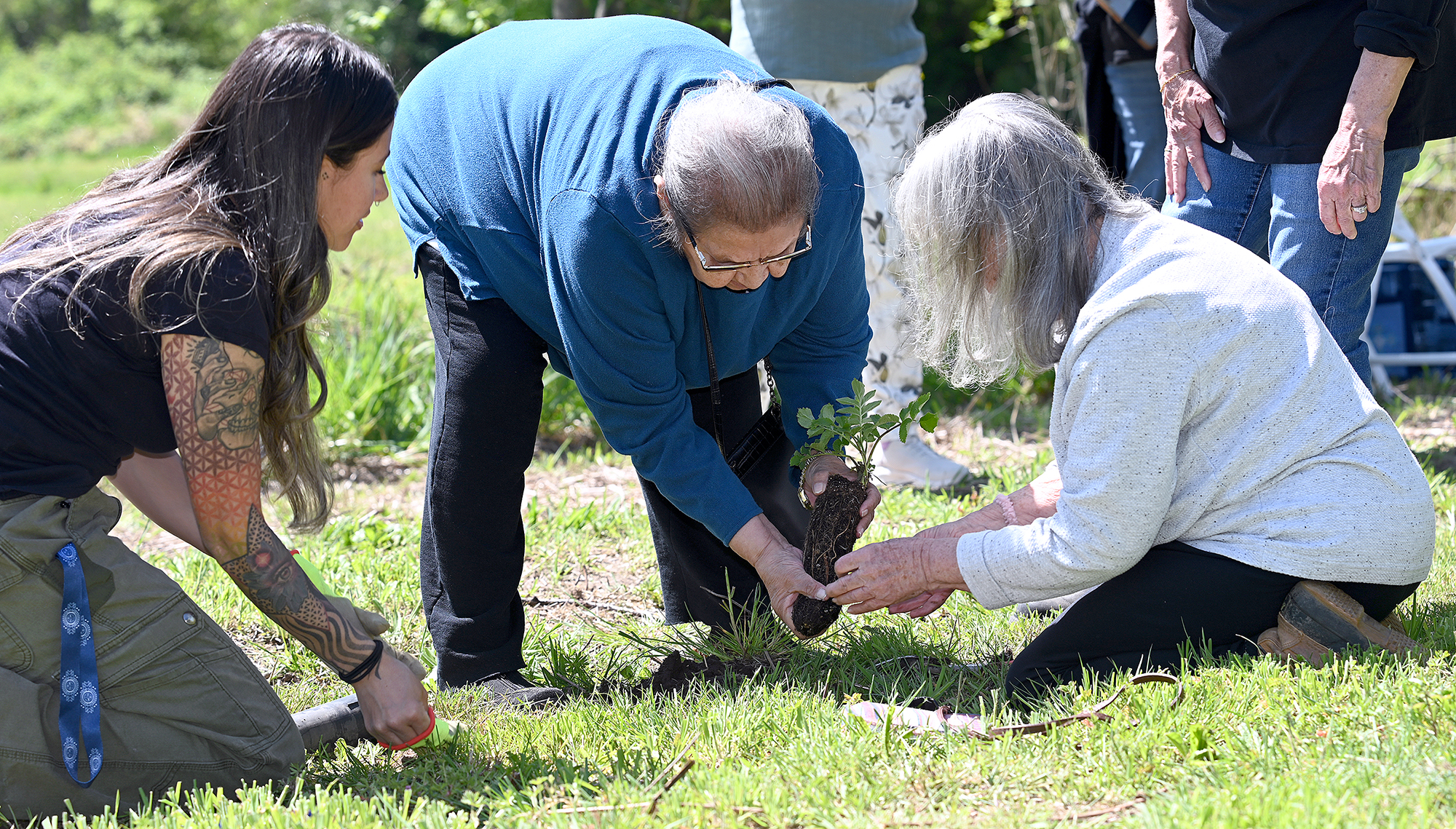
GASTON -- Tribal Elders ceremonially planted a blue elderberry seedling and scattered yarrow and biscuitroot seeds along the banks of Wapato Creek in the Wapato Lake National Wildlife Refuge Wednesday, April 29.
Working with the U.S. Fish and Wildlife Service, the Tribe has been helping to restore the lake and surrounding lands once called home by the Tualatin Kalapuya, before their forcible relocation to Grand Ronde. After being drained for farming in 1930s, Wapato Lake is once again holding water and thousands of wapato tubers have been planted.
During the Tribal Elders visit, the site was also formally renamed: Ma’mBit, in honor of a village that stood further upstream by Wapato Creek – the village of the People of the Creek – in the Tualatin Kalapuya language.
Tribal Cultural Policy Analyst Greg Archuleta told the Elders that the Tribe has been working with U.S. Fish and Wildlife Service to restore the site, planting wapato tubers, along with yampah and biscuitroot, tarweed, camas, oak, elderberries and other First Foods that once provided an abundant living. Wapato was so prevalent that the explorers Lewis and Clark originally called the region along the Columbia River Wapato Valley, Archuleta said. The Tribe’s native plant nursery provided many of the seeds and tubers used in the restoration.
Refuge Manager Rebecca Gomez Chuck told the Elders that the partnership with the Tribe “is our most important relationship. We work very hard to make sure you have access.” No herbicides are used in the wetlands, she added.
“We’re working on the restoration of wapato and other First Foods, and a big concern is, is it safe for consumption?” Archuleta said.
For the last few years, more than 500 soil samples have been taken to ensure the wapato is uncontaminated, both at Ma’mBit and several other locations in the area. The Tribe is still waiting for the results of those tests, which Archuleta said he hopes will come out this year. The change in federal administration has delayed the project, but Archuleta is hoping the results will be available in three to six months.
Before settlement, the Tualatin River sent water into the lake seasonally, creating habitat for waterfowl and other migratory birds, as well as for wapato. Later, the lake was pumped for irrigation of the onion fields around Gaston. Flooding in 1996 essentially ended the onion farming business there and in 2000, farmers asked the federal government to purchase the land. It became a wildlife refuge in 2013 and in 2024, managers began leaving water in the lake bed.
However, Archuleta said, the draining of the lake bed scoured away the original lake bottom, so that some water had to be removed to keep the water low enough for the wapato tubers, which want relatively shallow water.
Archuleta handed around plastic baggies filled with yarrow and biscuit root seed for the Elders to scatter along the creek bank. “We’ll probably come by and spread some water and maybe a little soil just to help them get started,” he said.
Several people exclaimed over the fragrance of the biscuit root seed, which can also be chewed or used as a kind of celery-flavored spice. They then carefully planted a blue elderberry seedling a few feet away from the creek. In the future, Archuleta said, he hopes to see the area become a place where Elders and other Tribal members can visit to gather traditional First Foods.
After their visit, the Elders were treated to a lunch of elk stew, cornbread and lemonade, prepared by the rangers in a house that still stands on the property.