
 Current Issue PDF
Culture
Yesteryears: Dec. 1, 2026
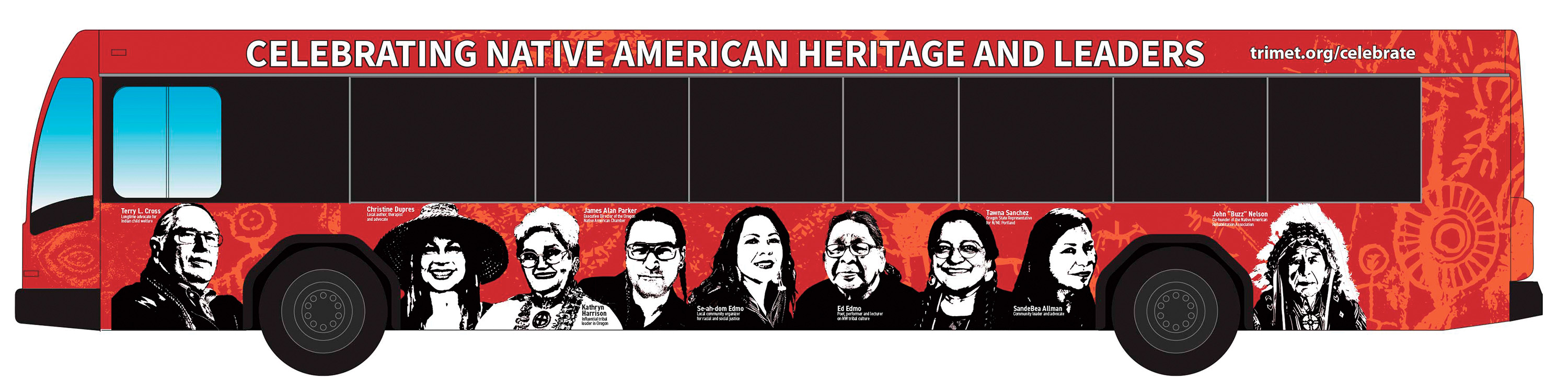
2021 — Tribal Elder Kathryn Harrison was one of nine Tribal leaders across Indian Country selected by TriMet to appear on bus wraps through August 2022. “Kathryn Jones Harrison of the Confederated Tribes of Grand Ronde is one of Oregon’s important Tribal leaders,” a TriMet website post stated. “She is known especially for her contributions during the Termination era, a time when the Eisenhower administration deprived Tribes of formal recognition.”
2016 — Tribal Council awarded a $215,660 contract to Cearley Construction of Estacada to remodel the interiors of the Tribe’s three Adult Foster Care lodges. Cearley submitted the lowest of two bids. Renovations included new flooring, paint, appliances and fixtures.
2011 —Tribal youth and sixth-grader Teegan Ritchey received the Courageous Heart Award from Desert Paws, a Palm Springs, California-based nonprofit promoting compassion and respect for all living creatures. Ritchey volunteered with Lend-A-Paw, an animal rescue nonprofit operating out of PetSmart, where she helped rescue and adopt out more than 40 dogs in 2010. She also volunteered at Epona Horse Rescue in Indio, California, caring for neglected, abused and unwanted horses.
2006 —Tribal Information Systems staff and the Cultural Resources Department partnered with Portland-based web design firm ISITE Design to host the department’s first webinar, showcasing its virtual gallery. Individuals from across the country could access the department’s webpage and call a toll-free number to listen and participate. Callers included people from an ISITE office in Boston and groups in California and New Mexico.
2001 — Smoke Signals ran a short story on Tribal member Chris Mercier, who had been freelancing as a feature writer for the paper. Mercier won first place in the Twice a Month Best Feature Writing category from the Native American Journalists Association. His story, “Gastric bypass surgery—even as a last resort it can change your life,” chronicled a Tribal member’s journey back to health following bariatric surgery.
1996 — The Tribe’s Human Resources Department established a Tribal employment coordinator position to help Tribal members find work with the Tribe, casino or elsewhere in the community. The coordinator would assess members’ skills, interests and employment needs, provide career counseling and work with local agencies to find employment opportunities.
1991 — Tribal member Matthew Kirkland reunited with his five siblings during the Restoration Powwow after 25 years apart. In 1966, when Kirkland was 2, his parents, Bob and Vivian Phillips, turned their children over to the state, with the siblings placed in separate homes. “It wasn’t really excitement, it was just kind of a feeling of relief,” Kirkland said, reflecting on their reunion. “It was amazing, given all the things that happened to us, that we had all made it back to our roots and gotten together.”
1986 — The Oregon Fish and Wildlife Commission approved a consent decree submitted by the Tribe, which heavily restricted its hunting, fishing and trapping rights outside reservation boundaries. The decree had to be agreed upon and signed before the Tribe’s reservation plan, which would return land to the Tribe, could be approved. “It took a lot of hard work for this to be a success and I’d like to thank everyone who was involved in the negotiations for their time and effort,” Tribal Council Chairman Mark Mercier said.
Yesteryears is a look back at Tribal history in five-year increments through the pages of Smoke Signals.