
 Current Issue PDF
Culture
Yesteryears - Nov. 15, 2026
2021 — The Tribe was seeking a grant from the Oregon Departent of Veterans’ Affairs to help convert the Procurement Department building into a new Veterans Service Office. Tribal Council approved applying for a $51,888 grant to renovate the building and provide a handicapped-accessible ramp, new computers, tables, chairs, window blinds and carpeting. The building’s garage would also serve as a gathering area and conference room.
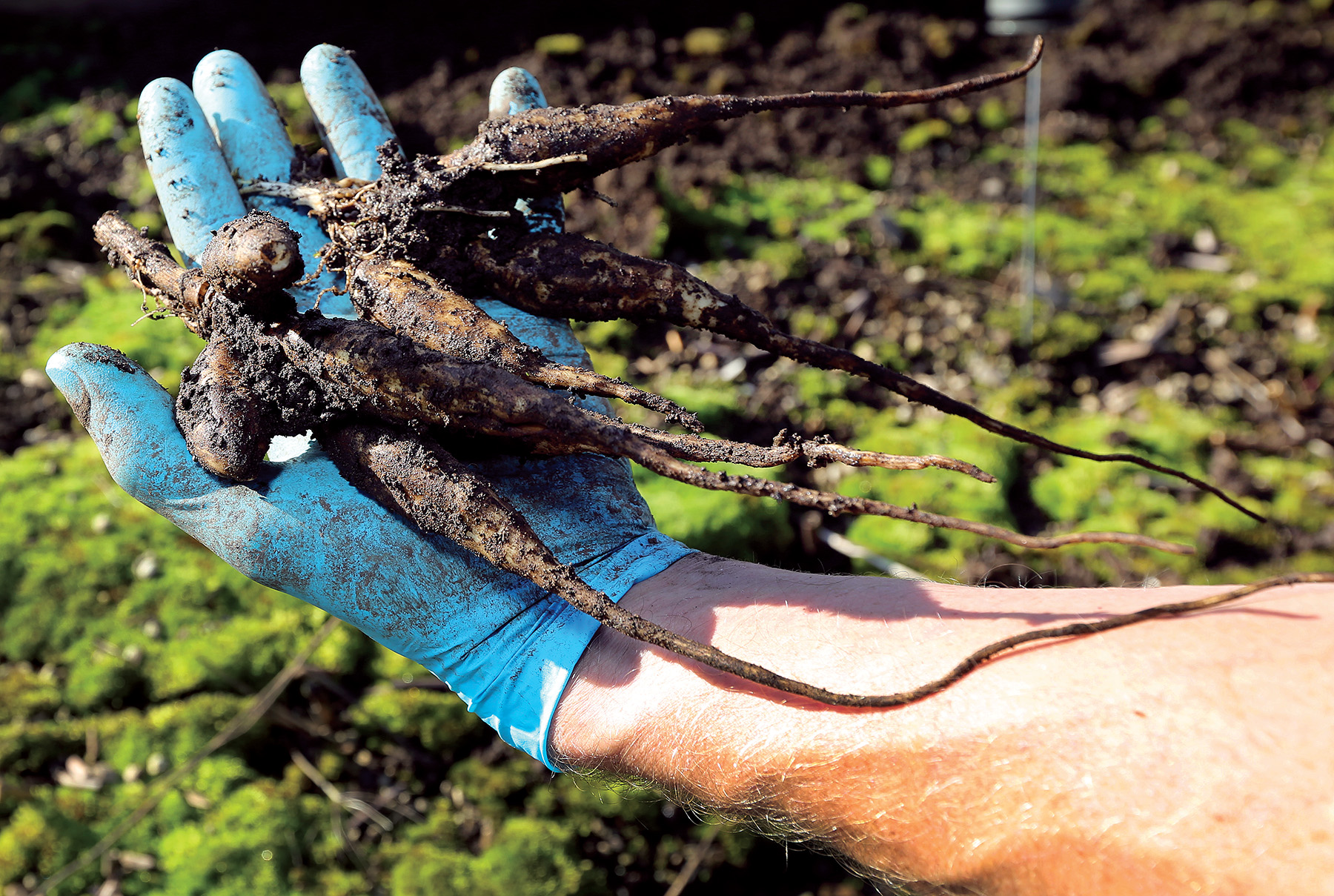
2016 — The Tribe’s Natural Resources Department held its first camas and yampah harvest through the Tribal Plant Materials Program. About 15 Tribal members and staff dug up 200 camas bulbs and 200 yampah bulbs to be replanted at Herbert Farm and Natural Area near Corvallis. The goal was to reintroduce culturally significant plants to historically important Tribal grounds for future harvesting by members.
2011 — The Tribe pledged $4 million to help fund the first phase of construction of the Newberg-Dundee Bypass. The pledge accounted for 20% of the required local match that Newberg, Dundee, McMinnville and Yamhill County also needed to contribute. “Whether we are working with governments at the local, state or federal level, we are consistently looking for ways to collaborate as partners to find solutions that benefit our shared communities and all citizens of Oregon,” Tribal Council member Chris Mercier said.
2006 — April Campbell became the Tribe’s new Education Department manager after previously serving as an education specialist from 2000 to 2005. Campbell wanted to focus on reincorporating technology into all education programs while remaining mindful that not all Tribal members had access to computers or possessed computer skills. “We’re not just here for academics,” Campbell said, “We’re here for total wellness, for the social, emotional, academic and physical growth of the students.”
2001 — Tribal Elder Kathryn Harrison received the Tom McCall Award for her leadership within the Tribe. Harrison was an instrumental figure in the Tribe’s Restoration in 1983 and served on Tribal Council for almost 20 years, becoming its first chairwoman. Named after former Oregon Gov. Tom McCall, the award was created to “recognize outstanding contributions from individuals who, by their actions, mirror the spirit and service to Oregon shown by Gov. McCall.”
1996 — The Tribe was seeking artwork from its membership to adorn the walls of its new Health & Wellness Center, which was scheduled for completion in July. The Health and Human Services Committee asked interested artists to submit a portfolio containing photos of their work, along with a brief description of each piece. Acceptable mediums included textiles, leather, metals, wood carvings, paintings, sculptures and more. Artists were also encouraged to incorporate themes depicting the Pacific Northwest, coastal culture and heritage into their pieces.
1991 — The Tribal Economic Development Department advertised its collection of business magazines and encouraged members interested in starting a business to take advantage of the available resources. Members seeking more information about their industry, business structure options or other aspects of business planning were encouraged to call or stop by the department to learn about its services.
1986 — With 1,983 people enrolled in the Tribe, Enrollment Clerk Margo George was preparing to issue photo ID cards to members over the following months. George was also involved in conducting a survey to help determine the Tribe’s greatest needs.
Yesteryears is a look back at Tribal history in five-year increments through the pages of Smoke Signals.