
 Current Issue PDF
Culture
Native artists share their work, inspirations at Chachalu art summit
By Alexander Bliven
Smoke Signals intern
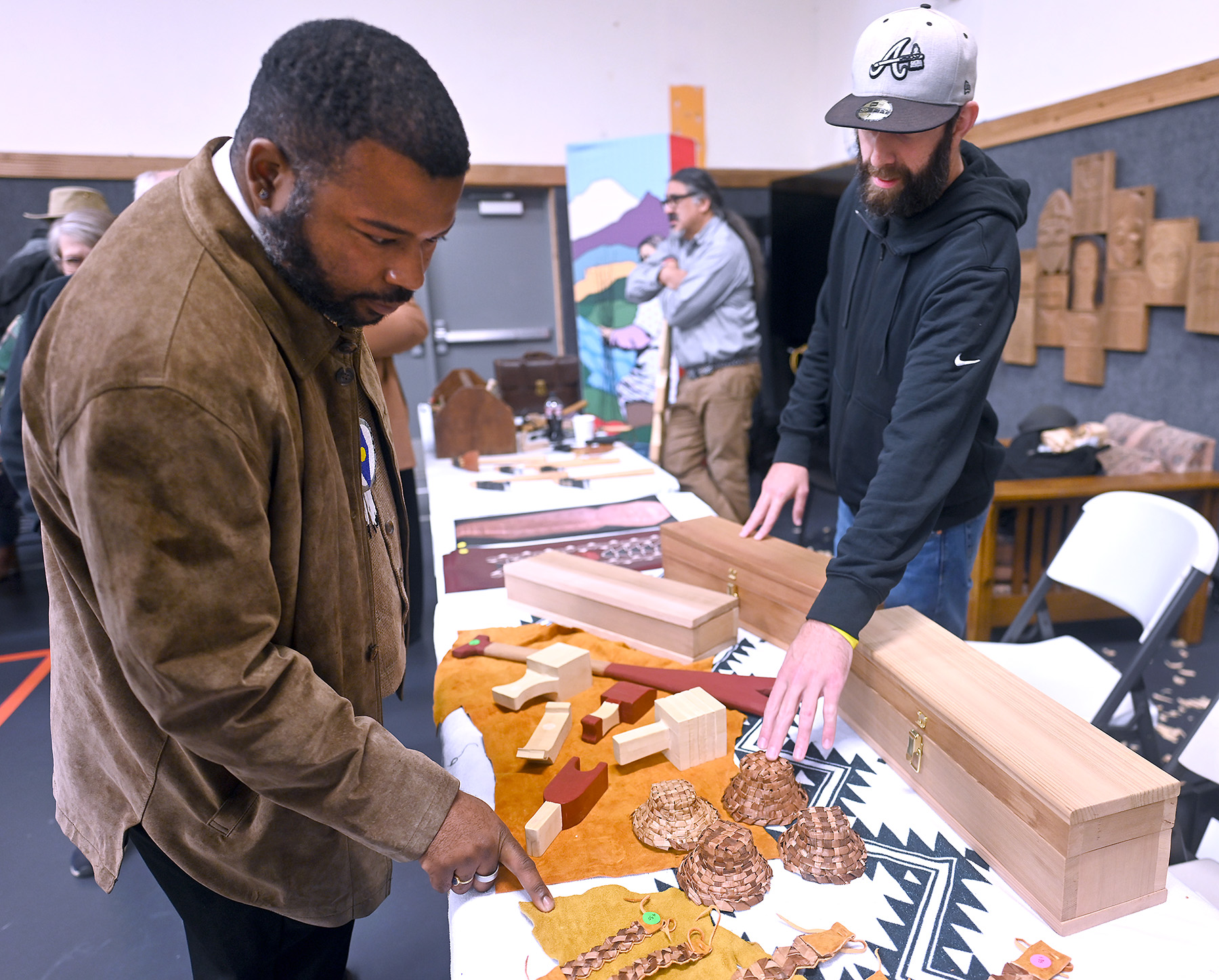
Artists from the Grand Ronde community and across Indian Country gathered at Chachalu Tribal Museum & Cultural Center Friday, Oct. 23, for the 2026 Placekeeping Art Summit open house.
Hosted by the Grand Ronde Cultural Resources Department, the event gave Native artists the opportunity to display their work, demonstrate their creative processes and connect with visitors. Artwork on display included paintings, glasswork, wood carvings, print blocks, baskets, metal sculptures and more.
The pieces ranged from imagery of Native people and plants to culturally significant animals, environmental awareness, folklore and traditional stories.
Tribal Cultural Resources Department Manager David Harrelson was in attendance and explained the event was organized to provide a space for Tribal artists to discuss and share their work with the Grand Ronde community and its partners.
Harrelson said he was pleased to see a sense of community developing through productive conversations and collaboration.
“We’re able to preserve and perpetuate Tribal culture by being in community with each other,” he said. “I’m actively seeing collaborations happen in the moment. People are learning from one another and developing new projects and I’ve seen people plan out new ideas as they get mutually inspired by each other.”
Harrelson said he hoped visitors would leave the summit feeling encouraged to create their own arts and crafts.
Among the artists was Kanani Miyamoto, a printmaker of Hawaiian-Japanese heritage, who creates murals and large-scale art installations. Her booth featured large wooden print blocks depicting Hawaiian flowers.
Born in Honolulu, Hawaii, Miyamoto draws inspiration from her background and upbringing. She said much of her work incorporates Hawaiian imagery, stories and philosophy. She shared photos of a mural she made for the Multnomah County Library in Portland and said she enjoys creating art for public spaces where it can be seen and appreciated by a wide audience.
“I do a lot of public-facing artwork,” Miyamoto said. “Artwork that’s really big and not necessarily in gallery spaces. I feel that kind of representation is very important to have.”
Miyamoto has collaborated with the Tribe on previous art projects and said she was honored to have opportunities to work with the Grand Ronde community.
Grand Ronde Tribal member Douglas Burgess II, a glass artist, also displayed several of his creations, including cups, bird figures and totems.
Also of Haida and Dakota heritage, Burgess said his work often explores reflection and storytelling.
“I feel like all forms of art that you work with is a reflection,” he said. “You are telling a story whether you are aware of it or not. With some of these totems, I’m telling a story of transformation. My thought process while making and refining them brought me to the realization that I’m talking about my own story. I figure that’s what artists do, tell their own story and oftentimes our stories reflect those around us too.”
Another of his creations was a piece he described as “playful,” depicting bright green slugs crawling through grass. Burgess said he hopes his work helps demonstrate the possibilities of glass as an artistic medium and inspires other Native artists to explore glasswork.
“Part of what I try to do is make glass art more accessible to underserved communities,” he said. “Lots of folks don’t even realize or recognize that glass can be another form of expression.”
Also sharing her work was Arusha Dittmer of the Ho-Chunk Nation.
Dittmer’s mixed-media creations incorporate acrylic paint, watercolor and ink to depict Native people, folklore, traditional medicines and ways of life. Her work also addresses environmental issues, endangered species and Missing and Murdered Indigenous People.
“We need to protect and be stewards of the land because as Native people, we’ve always took care of the land,” she said.
One painting Dittmer was particularly proud of depicted the Deer Woman, a figure from Indigenous oral traditions sometimes associated with protecting women, children and the community. She incorporated depictions of bitterroot, California poppies, camas and sunflowers into the piece to represent women from different Tribal nations.
Dittmer uses bright, bold colors throughout her work as a way of bringing more beauty into the world and transforming trauma into healing.
“I like to use bright colors because … life is hard enough as it is,” she said. “We need brightness and beauty in our lives wherever we can get it. As Native artists, we are giving back to our people in a good way. We are taking our traumas and transforming them into something beautiful and bringing beauty out of our struggles.”