
 Current Issue PDF
Culture
Fall First Foods Celebration brings renewed sense of heritage, community
By Alexander Bliven
Smoke Signals intern
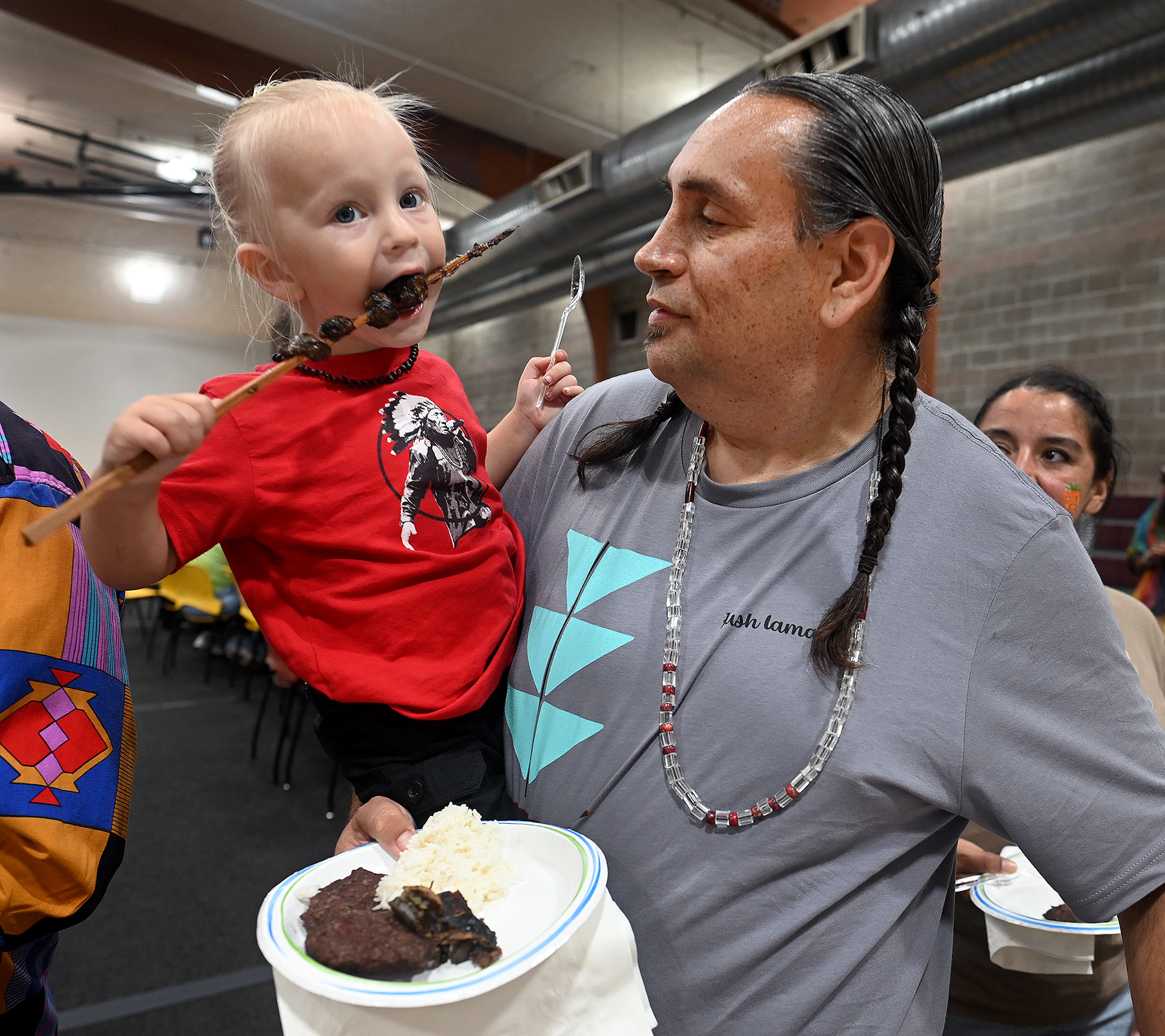
Attendees visited booths and sampled traditional foods during the Fall First Foods Celebration Friday, Oct. 2, at the Tribal gym, marking the first time the event has been held since 2019, following the COVID-19 pandemic.
Tribal Cultural Education Coordinator Jordan Mercier welcomed guests and explained that the celebration was an opportunity to connect with traditional foods and one another.
“This is about visiting, connecting, having a good time and trying some good food,” Mercier said.
Presented by the Grand Ronde Culture Committee, stations throughout the gym offered samples of crab apple and crab apple fruit leather, brodiaea, camas, wapato, biscuitroot, soaproot, yampah, smoked salmon and sturgeon. Teas made from rosehip, stinging nettle, fireweed and yerba buena were also available.
Guests were given pamphlets they could fill with stickers from each station they visited, encouraging them to learn more about the foods and plants being presented.
At the U.S. Fish and Wildlife Service booth, Tribal Land Steward Breanna Sisneros discussed a Native gathering garden being developed at Wapato Lake near Gaston. The garden is in its early stages, with volunteers planting camas, tarweed, biscuitroot and wapato.
Guests at Sisneros’ booth could also try barestem biscuitroot seeds, which she described tasting similar to celery with a peppery flavor, followed by sweet rosehip syrup made from rosehips gathered at Wapato Lake.
Tribal Native Plant Nursery Supervisor Jeremy Ojua distributed seed packets, including biscuitroot, yampah and camas, as well as yampah roots that attendees could take home and plant.
Ojua also had samples of raw and cooked brodiaea, allowing for an easy comparison of the taste difference.
Other booths demonstrated the processing of foods such as black oak acorns into an acorn porridge and how camas changes in appearance throughout the seasons. The Ceremonial Hunting Board provided hunting and fishing guides and hunter applications.
The celebration also highlighted food sovereignty. At one both, attendees were asked to mark on a regional map how far they travel to obtain food, while other displays noted the Tribe’s efforts to increase access to and knowledge of traditional foods.
A larger meal was served later during the event, preceded by a blessing and drum song. Guests could enjoy bear sausage, elk stew, deer sliders and salmon, which Mercier said had been prepared that day in the Tribal plankhouse achaf-hammi.
Culture Committee Secretary Marianne Blanchard said the celebration gives community members an opportunity to better understand foods that have been eaten by the Tribe for hundreds of years, as well as safe gathering practices and resources available to Tribal members.
Blanchard said organizers hope to make First Foods an annual celebration, with another event planned in spring following mek mek Mania and later again in fall.
“This is only a drop in the bucket,” Blanchard said, “The next one will have even more. There’s hundreds of traditional foods.”
Blanchard hoped guests had an educational experience during the celebration and that they realized learning something new about tradition could also be fun. She also said to always reach out for help if needed.
“Ask everything,” Blanchard said, “Whether it’s the Culture Committee, Cultural Resources (Department) or community health clinic, there’s always going to be somebody to help you and if they can’t, they’ll find somebody who will. That’s what community is.”