
 Current Issue PDF
Tribal Government & News
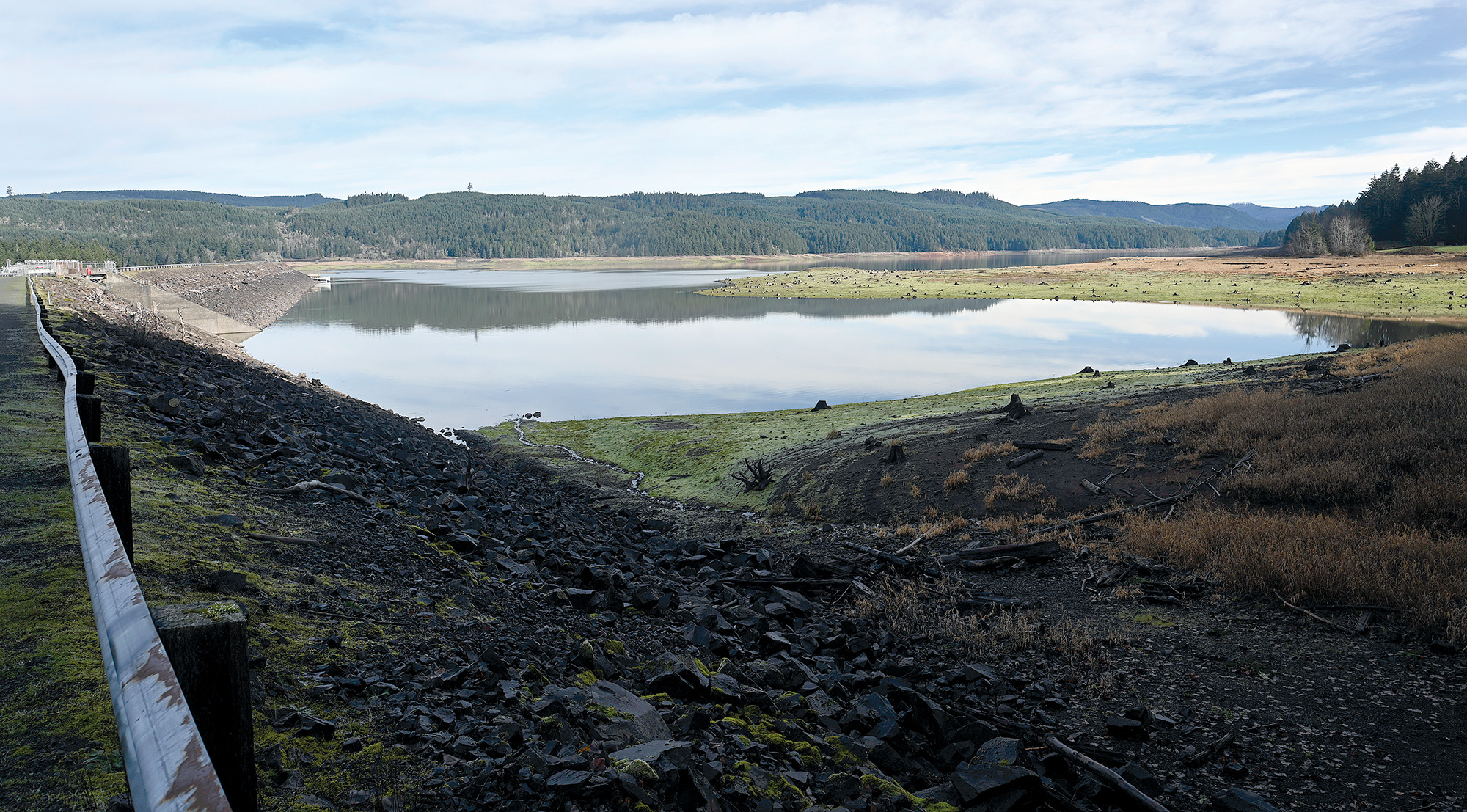
County, cities seek to stop or delay dam drawdowns
By Nicole Montesano
Smoke Signals staff writer
Marion County and the cities of Albany and Millersburg are suing the Army Corps of Engineers to delay or stop the deep drawdowns of Detroit Lake and Green Peter dams.
The Corps has conducted deep drawdowns at Green Peter previously. It plans to do so again this year and begin drawing down Detroit Lake this fall.
Salmon advocates say the drawdowns are crucial for preventing the extinction of spring Chinook and winter steelhead in the Willamette River system. City officials said the Army Corps damaged their water treatment plant. Marion County officials said it also fears damage to city treatment plants and that drawing down Detroit Lake would harm its tourist value and reduce irrigation water, especially if next winter is dry. Many of those arguments were taken from Army Corps documents.
The National Marine Fisheries Service instructed that drawdowns begin in 2008, but the Army Corps resisted until a federal judge ordered it to comply in 2021.
In an environmental impact statement filed in May, the Army Corps wrote that, “The deep drawdown at Detroit Reservoir would adversely affect water supply, water quality, drinking water (facility operation) and recreation. The effects of the drawdown on fish depend on the species and the life stage of the species.”
It continued, “In very dry winters, USACE may not be able to refill the reservoir to a minimum conservation pool by Feb. 1, which could result in a lower reservoir level than currently experienced in very dry years. ... During dry years, USACE would coordinate with regional partners to minimize effects to downstream users reliant on streamflows.”
The cities and county want the drawdowns delayed and the Army Corps to pay for damages.
Grand Ronde Tribal Council member Kathleen George, a member of the Tribe’s Salmon Strength Team, said the drawdowns are critical.
“There is no denying that Willamette Basin salmon are in real danger of extinction in our lifetime,” she said in an email. “Deep drawdowns are the most effective tool we have to reverse that decline. We recognize that there are concerns about drinking water and recreation…those are challenges we can work together to solve. Those are conversations that the Tribe wants to be a part of. But the real threat of salmon extinction is urgent and can’t be avoided without the drawdowns. Once salmon populations are gone from the Willamette Basin, they are gone forever.”
Attorney Steve Elzinga wrote for Marion County that the Army Corps failed to conduct a turbidity study ordered by Congress and the county wants the drawdown paused until it completes the study, “and allows informed public comments.” Turbidity refers to sediment in the water, which can clog treatment filters.
If the Army Corps had published the report by the Jan. 4 deadline, Elzinga wrote, the public would have had time to evaluate it and submit comments.
The Army Corps’ impact statement said it expects the Detroit Lake drawdown to cause less turbidity than the Green Peter drawdowns.
“The drawdown of Detroit Reservoir is shallower than Green Peter Reservoir and would expose a significantly smaller area of sediment,” the statement said. “Additionally, USACE is proposing to draw down the reservoir to the target elevation over several years, minimizing the amount of new sediment mobilized and exposed each year. Due to the shallower drawdown, the larger reservoir would retain more sediment than Green Peter Reservoir, however, the fine clay material eroded from exposed sediment is likely to stay in suspension and pass downstream of Detroit Dam.”
The drawdowns are planned for fall, when juvenile salmon move downstream. Typically, the reservoir is filled by winter and spring rainfall. But last year’s lack of rainfall worries the county.
Elzinga noted that the National Weather Service Climate Prediction Center has forecasted below normal seasonal precipitation from November 2026 to January 2027 in the Willamette Valley.
Further, he argued the drawdown “would significantly increase the total collective costs to local governments in Marion County. These costs are expected to be millions of dollars to repair, replace or find alternative water sources. More importantly, preparations will take more time than proposed … full preparations cannot be completed by the fall of 2026.”
Albany and Millersburg use membrane filter cells to purify drinking water from the South Santiam River, which were designed for water with low turbidity and cannot handle extremely muddy water.
“When the water supply from the South Santiam River has excess sediment, as defendant caused and will continue to cause … the treatment system can malfunction, stop working completely and/or have a reduction in its useful life,” the cities’ attorneys wrote.
The Army Corps conducted drawdowns of the Green Peter Dam reservoir in November and December 2023. The cities said that it knew the November drawdown would cause high turbidity levels and violated state and federal law by not mitigating the problem.
“During the drawdowns, the turbidity levels were exponentially higher than normal and well beyond the levels allowed under Oregon’s water quality standards. … This increased turbidity was caused by the corps unreasonable and negligent conduct,” the lawsuit stated. “The corps failed to adequately study turbidity when planning its drawdowns and the corps failed to take reasonable steps to mitigate turbidity during the drawdowns. The corps unreasonable conduct includes … allowing water to flow at high velocities during the drawdowns,” stirring up mud.
The lawsuit continued, “The Corps took these actions even though state water quality standards, as incorporated in federal law and a federal injunction, all required the Corps to mitigate turbidity.”
Consquently, it said, the cities will “be required to improve their water treatment plant” for an estimated $31 million. The cities asked for damages and a declaration that the drawdowns violated the federal Clean Water Act and state water quality standards.