
 Current Issue PDF
Tribal Government & News
General Council briefed on Community Development Plan, capital improvement projects
By Danielle Harrison
Smoke Signals editor
Tribal Engineering & Community Development Department Manager Ryan Webb briefed the membership on various capital improvement projects on and off the reservation during a Sunday, May 3, General Council meeting held via Zoom and in Tribal Council Chambers.
Webb was joined by Tribal Community Development Manager Kristen Svicarovich, who shared an update about the community development plan, Grand Ronde 2033.
“The Community Development Plan was adopted by Tribal Council in 2021,” she said. “Really the focus of that plan is to answer the question, ‘What will the Grand Ronde Tribe look like in 2033?’ It looked across all of our large departments and programs, 15 different focus areas and developed different goals and initiatives to help us achieve what it is the Tribe is looking to accomplish by 2033.”
The Tribe launched the Community Development Plan effort in May 2018 to help guide the decisions and setting of priorities for the Tribe as the 50-year mark of Restoration approaches in 2033.
Svicarovich discussed the plan’s background, 2025 program successes and Tribal organizational highlights, while Webb discussed the various construction projects underway on and off the reservation.
Programmatic successes included various Tribal land acquisitions, cultural arts program, adding a first-grade classroom to the shawash-ili?i skul (Tribal school), TERO annual appreciation lunch, temporary Tribal nutrition assistance program, integrated pest management policy, navigating state and federal grants during a time of transition, the campus master plan and climate adaptation plan.
“So, for programmatic successes, one of the big ones this year is just our Lands Department and the sheer amount of work that they continue to do on behalf of the Tribe,” Svicarovich said. “The Tribe acquired six different properties in 2025 and three of them were in the general Grand Ronde area. (The other three) were conservation properties throughout the Tribe’s homelands. The big one that’s highlighted is Fort Yamhill, over 100 acres that was transferred back to the Tribe through the state parks (department). There was a really tremendous effort led by our lands team in getting that land back.”
Organizational highlights included implementing the General Welfare Assistance Program for all Tribal members, a new public safety ordinance protecting vulnerable adults and Elders, the Spirt Mountain community path project, electric vehicle charging stations and continuing to work toward building a resident and recreation center.
“A real highlight from 2025 is the rollout of the General Welfare Assistance Program,” Svicarovich said. “It was approved in August and the first payment went out in September…It replaces per capita and allows for payments that are non-taxable made to eligible members. It’s really just a different approach to providing support for Tribal members.”
Capital improvement projects
Webb provided the Tribal audience with an update of phase two of the Tribal homeownership development, phase three and 3.1 of the Wind River Apartments, Early Care and Education building, seed processing building, resident and recreation center, railroad depot building remodel, shawash-ili?i skul remodel, health and wellness projects, nature playground, street light upgrades, electric vehicle charging stations, the tumwata village project in Oregon City, and transportation planning and improvement.
“Phase one of the homeownership development was completed a few years ago now and all of the 20 homes are occupied by Tribal members,” Webb said. “That was really a great success as a project that has a lot of challenges as we worked through both design and construction but I think it’s really a testament to see it’s really turned into a thriving community with some amazing young families that are getting to grow up here on the reservation…Now we’ve turned our focus to phase two.”
Homeownership phase two: Road, sidewalk and utility installation is underway and includes 32 lots. Homes will likely range from 1,200 to 2,000 square feet and include three- and four-bedroom units. Each one will be solar ready. Home construction rollout is still under discussion. TERO workers have spent 547 hours so far working on the project.
Wind River Apartments, phase three: There will be up to 45 units within 10 apartment buildings located adjacent to the Tribe’s Housing Department offices at 28450 Tyee Road. The apartments will contain a mix of one- and two-bedroom market rate and low-income, solar ready units. Construction is underway and the first buildings are expected to be complete by the end of the summer. TERO workers have spent 4,033 hours working on the project.
A separate project, Wind River Apartments phase 3.1, will include an additional eight units, all two bedroom. The Tribe is in the bidding process for the project and a tentative completion date is spring 2027.
Early Care and Education: The 26,000-square-foot building includes 12 classrooms, a new kitchen, outdoor play areas and support areas, and is located behind the old powwow grounds near the existing Tribal gym.
The project was funded with federal, Tribal and grant funds and was approximately $16 million. Construction began in December 2023 and was completed in March 2025. TERO workers spent 3,353 hours working on the project.
Seed processing unit: The grant funded project at the Natural Resources Department provides enclosed space for NRD staff to harvest and process seeds from native plants.
Resident and recreation center: Design is almost complete on the 45,000-square-foot building, which will be located on the Smith property across from Tribal Housing Department offices. It includes a fitness center, physical therapy areas, medical exam spaces, craft rooms, gym, event center and outdoor sports facilities, splash pad and playground.
“This is an amazing project that has thrown us nothing but obstacles,” Webb said. “I presented this last year and definitely had better news then. What I mean by bad news is that we were awarded a $20 million grant from EPA in 2024 and due to the change in administration, that grant was rescinded. We tried to fight to make sure that they lived up to their obligation but unfortunately, it has not gone our way and left a big hole in construction funding.”
Webb added that the Tribal grants team was continuing to look for new ways to secure funding for the project.
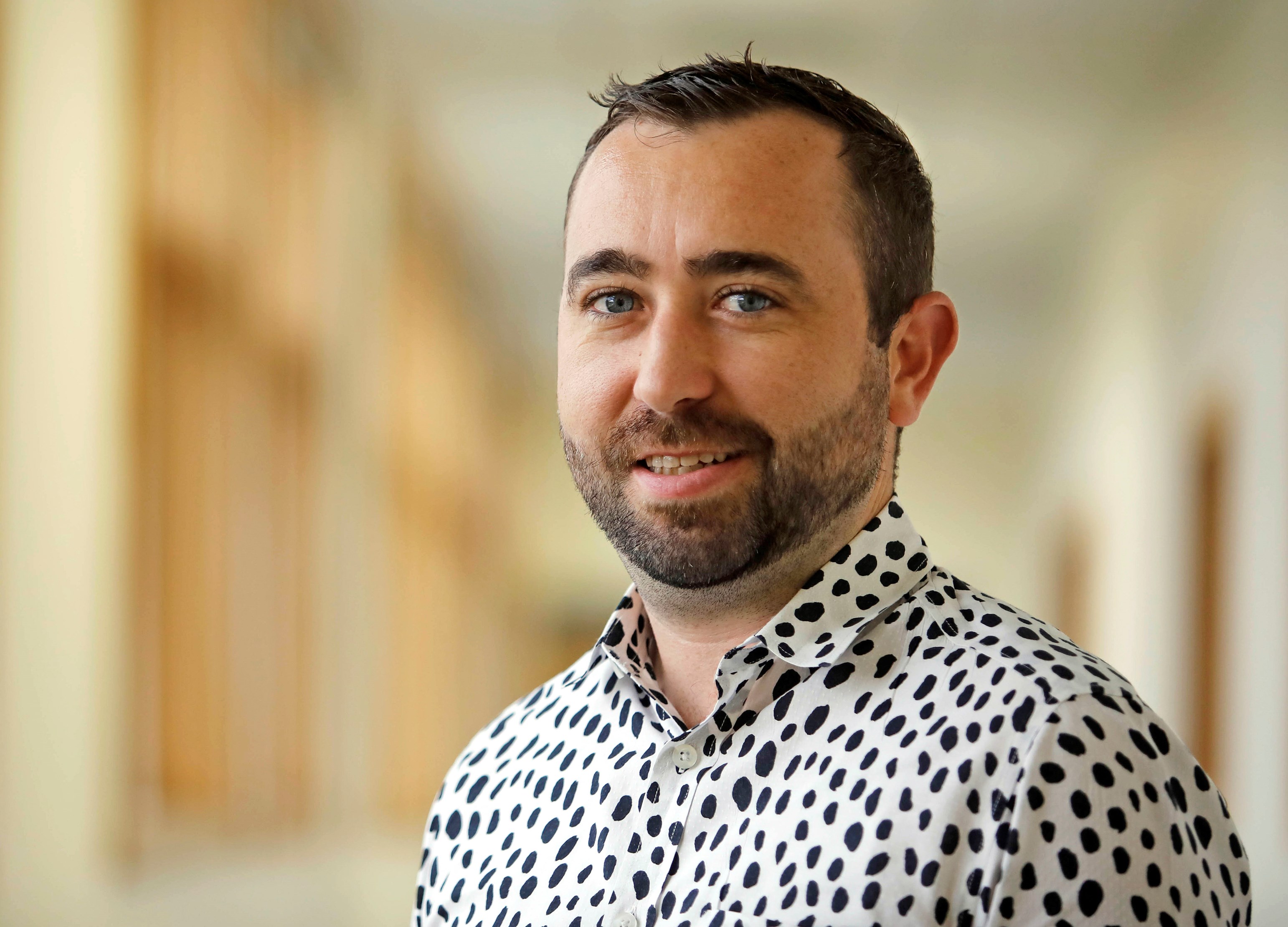
Tribal Engineering & Community Development Department Manager Ryan Webb
Railroad Depot: The Tribally owned historic building near Grand Ronde Road will be redesigned so that it can house two Tribal departments. The design phase is underway and expected to be complete by fall 2026. A grant will cover design work and some construction, but more funding will be needed to complete the building.
shawash-ili?i skul: There is a planned renovation and expansion of the building to accommodate for future program growth. An architect has been selected and design work should start soon and be finished by the end of the year. The new construction will connect the school with the Youth Education Department and will include a phased approach to minimize disruption to the programs. It will cost approximately $12 million and grant funding is being sought to cover expenses.
Health and wellness projects: The Main Street Recovery House in Sheridan was complete in 2025 and is a treatment program with lodging and wraparound supports for residents. Additionally, a detox center has been added to the Great Circle Recovery medication assisted treatment clinic in Salem.
There will be a remodel of the Health & Wellness Center’s HVAC systems, an elevator modernization and pharmacy expansion. Webb noted that the building is one of the oldest on the Tribal campus. A contractor has been hired and work is expected to be completed in spring 2027.
Nature playground and street light upgrades: The nature playground, located between the Tribal Governance Center and the Elders Activity Center, provides a needed outdoor space for children to explore and was opened in 2025.
The street light upgrades included replacing 251 street light fixtures on the Tribal campus and in housing with LED lighting for a projected annual savings of $20,000.
Electric vehicle charging stations: One solar charging station was installed at the Tribal Governance Center in 2023. Two more have been purchased and six other EV chargers will be located on the campus and two electric vehicles will be added to the Tribal fleet for employee use.
The chargers and stations are being funded through an Oregon Department of Transportation Carbon Reduction Grant.
Multi-use path from Grand Ronde to Spirit Mountain Casino: The Tribe received a $206,000 grant from the Oregon Department of Transportation’s Community Paths Program for a feasibility study for a pedestrian/bike connection between Grand Ronde Road and Spirit Mountain Casino. The intent is to use the old railroad alignment as much as possible. Work is in the planning phase.
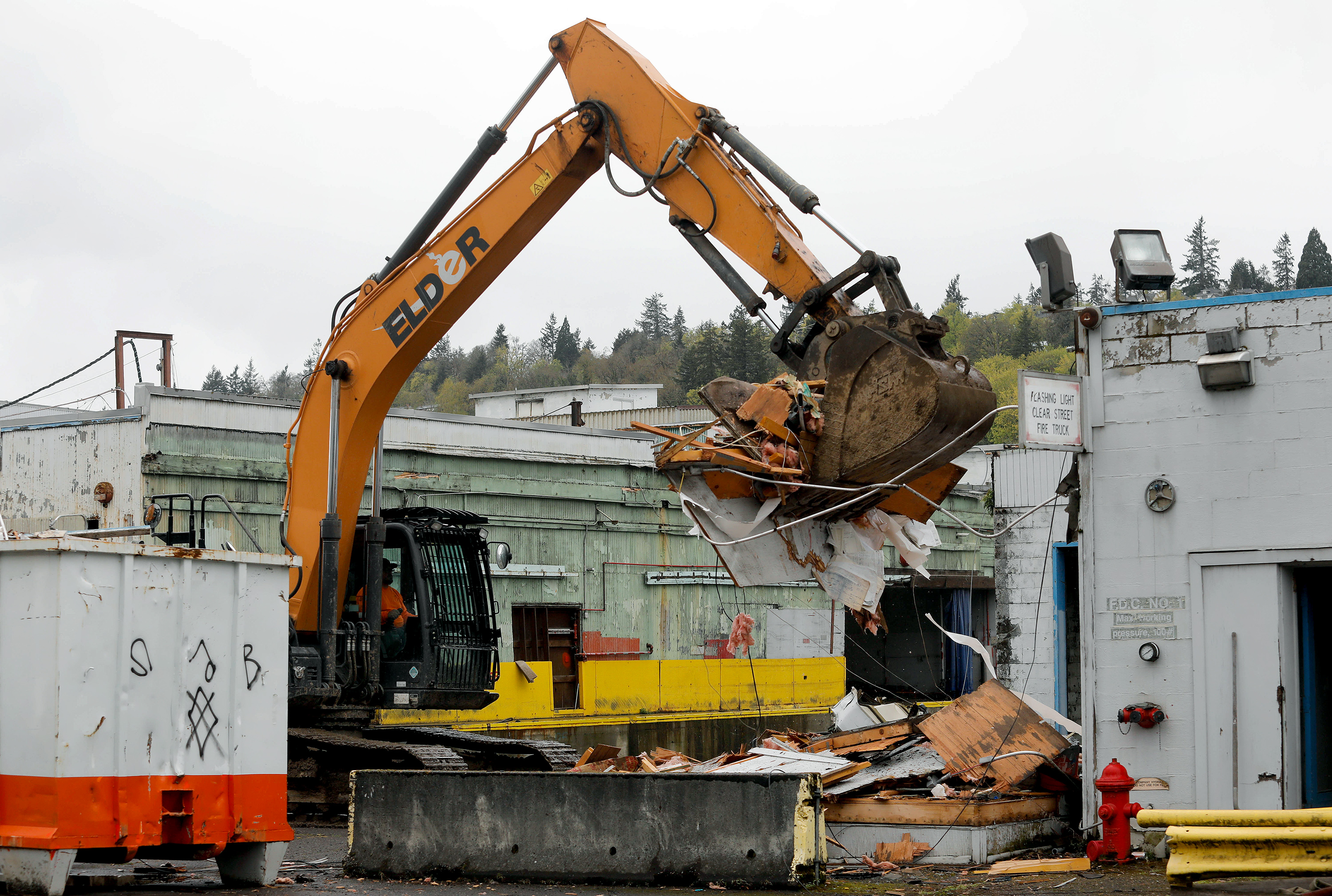
tumwata village: Demolition of old structures at the former Blue Heron Paper Mill site in Oregon City continues. So far, 75% of the existing buildings have been demolished.
At the same time, work has been ongoing for designing the infrastructure and utility improvements that will be phase one. The Tribe was awarded $2 million in federal funding to assist with the efforts and a groundbreaking ceremony for block one improvements is set for Thursday, May 28. Additionally, an intergovernmental agreement was signed with Oregon City for $12.5 million to reinvigorate the Riverwalk Project at the site and the Tribe is working on securing $20 million from Metro.
Webb also gave a brief update about the projects Public Works Coordinator John Mercier has been working on during the past year. These include transportation planning, transit, transportation improvement and maintenance.
Mercier completed the Long-Range Transportation Plan update and it was approved by the Bureau of Indian Affairs last year. Approximately $25 to $30 million will need to be spent on improvement projects or maintenance activities for roads in and around the Tribal campus.
In the area of transportation improvement, an access road to Fort Yamhill was repaired and culvert work was complete to reduce pavement erosion. Additional maintenance work included patching potholes, restriping pavement markings, gravel road treatment to reduce dust and debris clearing from various roads.
After the nearly hour-long presentation concluded, Webb fielded 12 questions and comments from the audience.
“Wow. Thank you, Ryan,” Tribal Council member Matthew Haller said. “When you see (these projects) rolled up into what you presented today, it’s amazing. It’s shocking. I love that you highlighted all the areas of success.”
In other action, door prize winners were Mike Portwood, Deborah Gilbert, Jesse Norton, Linda Olson and Valeria Atanacio, $50 each; and Will Rife, Lenny Logan and Chris Bailey, $100 each.
The next General Council meeting will be held at 11 a.m. Sunday, June 28, in Tribal Council Chambers and via Zoom, for the purpose of Tribal Council nominations. All nominations must be made in person.
The entire meeting can be viewed by visiting the Tribal government’s website at www.grandronde.org and clicking on the Government tab and then Videos.