
 Current Issue PDF
Health & Education
Zombie Walk message? Movement helps your brain
By Nicole Montesano
Smoke Signals staff writer
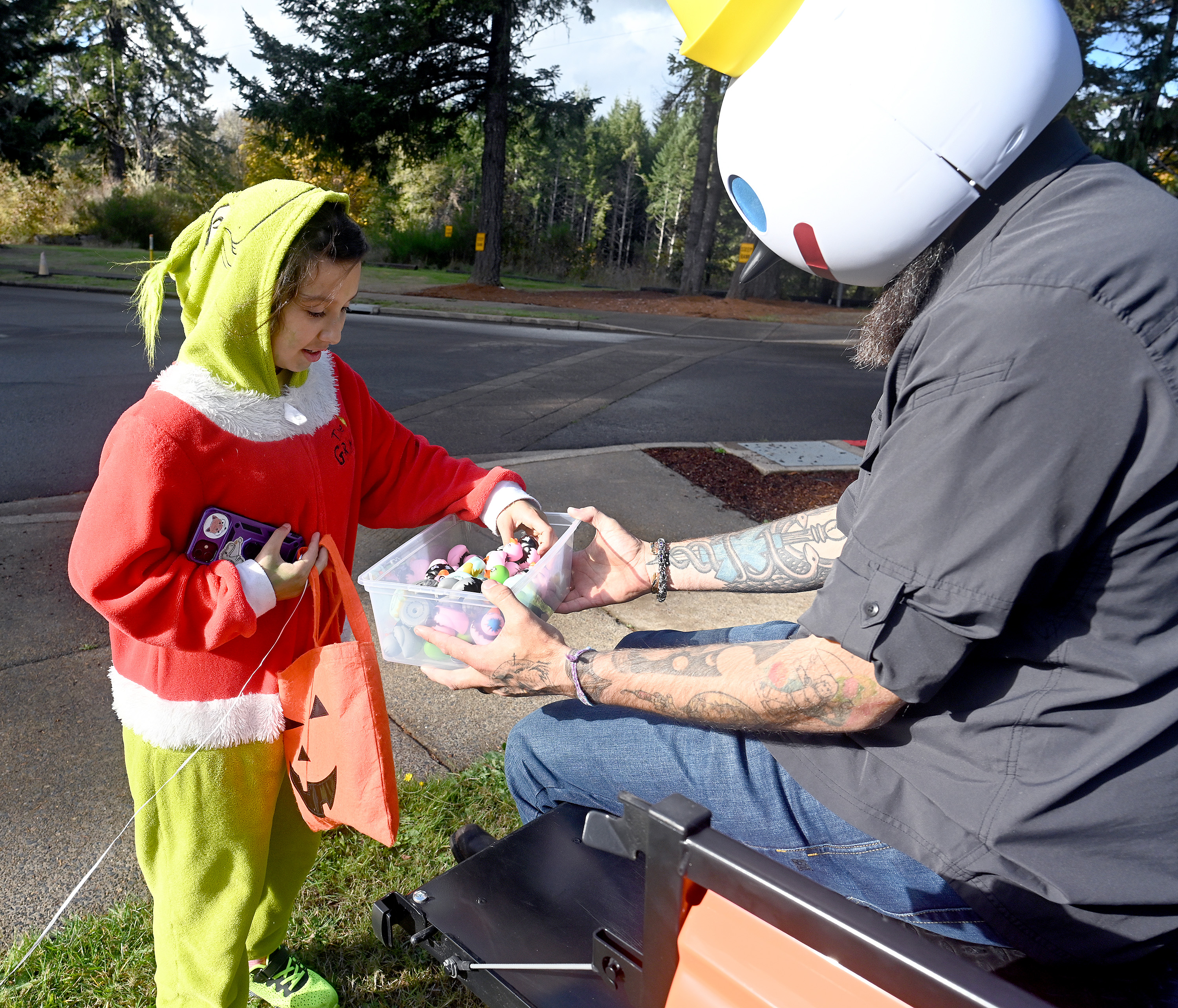
The zombies – or more accurately, cats, knights, Grinches, ghosts and other beings – participating in the Friday, Oct. 30, Zombie Walk organized by the Tribe’s Community Health Department were more interested in collecting Halloween candy than brains. But by taking a walk and enjoying a social outing, Tribal Dementia Care Specialist Barbara Worthington said they were following two of the recommendations for improving their own brains and protecting them as they age.
“It was just an idea that I had that I’ve tooled around with for a while: How can we make more brain health events fun and community involved?” Worthington said. “I think that’s the direction we’re trying to go with Community Health, to find more creative and welcoming, fun events that can involve not just Elders or those living with dementia or caring for dementia, but the whole community: Families, youth, anything to get people talking about brain health.”
Participants, most of them in costume, gathered at the Cheryle A. Kennedy Public Health Clinic on the Tribal campus, walked up through the campus to the Elder housing area then looped back along Grand Ronde Road, stopping periodically at stations to gather candy, “brain beanie” caps and other treats along the way.
Worthington said she’s trying to create events that attract mixed ages and allow people to practice simple advice that can be so deceptively difficult: Exercise more, eat a nutritious diet, socialize with others and work on emotional health.
In 2025, a team of researchers released findings from a study showing that Americans have an estimated 42% risk of developing dementia, primarily after the age of 85. However, people can take action years earlier to protect the health of their brains.
“My goal is just to try to normalize people talking about brain health and what that looks like, and it doesn’t always have to be scary,” she said. “We can do things now and we can do fun things and it’s OK to talk about. It’s ok to look at everyday activities we can do to reduce risk, kind of like what we did for the walk. We did exercise and we did socialization and emotional health.”
Even fairly small changes can make a significant difference, Worthington said, and are much more effective than getting overwhelmed by a list of things to do.
“People think of it like a chore and we’re just trying to normalize it,” she said. “These small little lifestyle interventions reduce our risk and actually can start dialing back cognitive decline, even in informal ways like this.”
Worthington noted that lifestyle changes don’t have to involve an entire overhaul.
“I want people to stop being scared of the how overwhelming it can look and just say, ‘What’s one thing I can do? I can get out for a walk. I can maybe make a healthier meal a part of my routine.’ You know, just one small thing,” she said.
Worthington said it’s especially important for Elders who are showing cognitive decline and want to take charge of their brain health and overall wellness.
“So take one thing, make that part of your routine and then once that is, then you just take another thing and make that part of your routine,” she said. “Getting out, like we just did, walking. Try to do it three to five times a week and you’d be impressed at how much improvement, if you would, with cognition, that can happen. It’s not a cure-all of course. But still, it’s taking charge of our health and our brain health.”