
 Current Issue PDF
Tribal Government & News
Tribal Council meets with Oregon Secretary of State
By Nicole Montesano
Smoke Signals staff writer
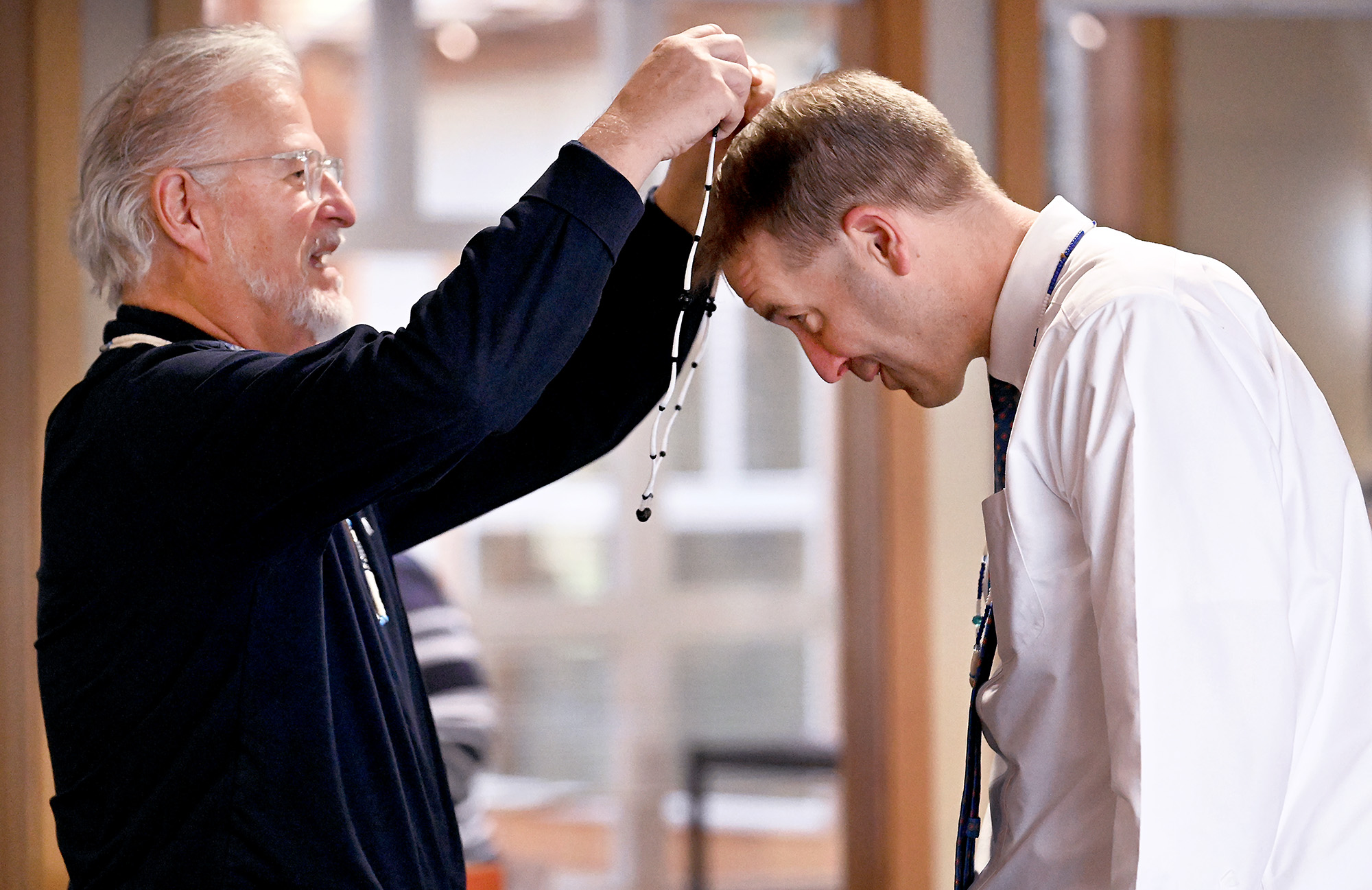
A visit in mid-January with Oregon Secretary of State Tobias Read provided Tribal Council with an opportunity to acquaint him with the Tribe’s history and concerns, Tribal Council Vice Chair Chris Mercier said.
Read, who was raised in Idaho and moved to Oregon to attend college, spent the afternoon of Wednesday, Jan. 14, visiting the Tribal campus for a meeting with Tribal officials and a chance to better understand the issues that occasionally come up at the state level.
“I’m trying to think of the last time a secretary of state came out here,” Merceir said. “He’s a cool guy.”
Although Read won’t have authority over many of the issues that come up between the state and the Tribe, Mercier said, Read had wanted to make sure he understood them, something the Tribe appreciated.
“He said he was embarrassed that he still had a lot to learn about the Tribes and meeting on their home grounds was a good way to gain more familiarity with their histories and issues of importance to them,” Merceir said.
Since Tribal law can intersect with so many different areas of state governance, the issues can be complex.
“I appreciate the Tribal Council, the staff of the Natural Resources Department and members of the Confederated Tribes of the Grand Ronde for welcoming me and taking the time to meet,” Read said in an email. “These conversations are essential to understanding the Tribe’s key priorities and to strengthening our partnerships and I look forward to continuing this important work together.”
Mercier said the visit began at Natural Resources, with explanations about the department’s functions and the Tribe’s ceded lands.
“We went over everything that’s happened with the memorandum of agreement (expanding Grand Ronde’s hunting, fishing and gathering areas) and everything that happened with the (state) in July and our efforts to mitigate the request by other Tribes to have the MOA repealed,” Mercier said.
In July 2025, the Oregon Department of Fish and Wildlife Commission voted 4-to-2 to accept a petition by four Tribes – Nez Perce, Yakama, Warm Spring and Umatilla – asking to amend or repeal the Tribe’s MOA with the state of Oregon. Nez Perce and Yakama are not Oregon Tribes.
“We wanted to make sure he understood our position,” Mercier said. “Tribes from outside the state should not have veto power and should not be consulted the same as Tribes inside the state…I told him, our history with other Tribes is not always a positive history. They won’t admit it, but the fervent opposition to all things Grand Ronde doesn’t always seem to me to lie within the reasons that are stated publicly. So, we spent a good chunk of time talking about hunting and fishing.”
In addition, Mercier said, Read discussed the state’s corporation division and opportunities for partnerships with the Tribe. Merceir said the council asked whether there might be training sessions or resources available for Tribal members who want to open their own businesses but find the registration system cumbersome.
The state does offer workshops and classes on “navigating the maze of paperwork and permitting processes,” Mercier said.
Classes are offered through the state’s network of small business development centers, which are located locally in Lincoln City and Salem. Classes and more information may be located at oregonsbdc.org.
The state business information center offers some guidelines at sos.oregon.gov/business/Pages/business-information-center.aspx.
Voting issues also came up, Mercier said, noting that the Tribe’s turn out for state and federal elections is about half that of the state average of 60 to 70% -- “close to the level of county elections,” Mercier said.
Read asked whether the state could be of assistance in “Get out the vote” campaigns, Mercier said, but added, “It’s a little tricky … half the membership does not live in the state.”
Read oversees the state archives, among his other duties, and Mercier said the Tribe learned that it’s possible there are old Tribal records, undiscovered among the trove of microfiche and old papers stored away, but “it would take quite a bit of effort” to locate them.