
 Current Issue PDF
Culture
Yesteryears - March 1, 2026
2021 — After nearly a year of holding classes online because of the COVID-19 pandemic, the Willamina School District expected to re-open to all students by March 16. First and second graders returned to the Oaken Hills campus under a hybrid model the prior month, joining kindergarteners who had been attending half-time since September.
2016 — The Tribe was preparing to hold its second Tribally-managed hunt. In 2015, the Tribe had issued the first hunting tags to be disseminated by a Native American Tribe in Oregon for hunting on its own land.
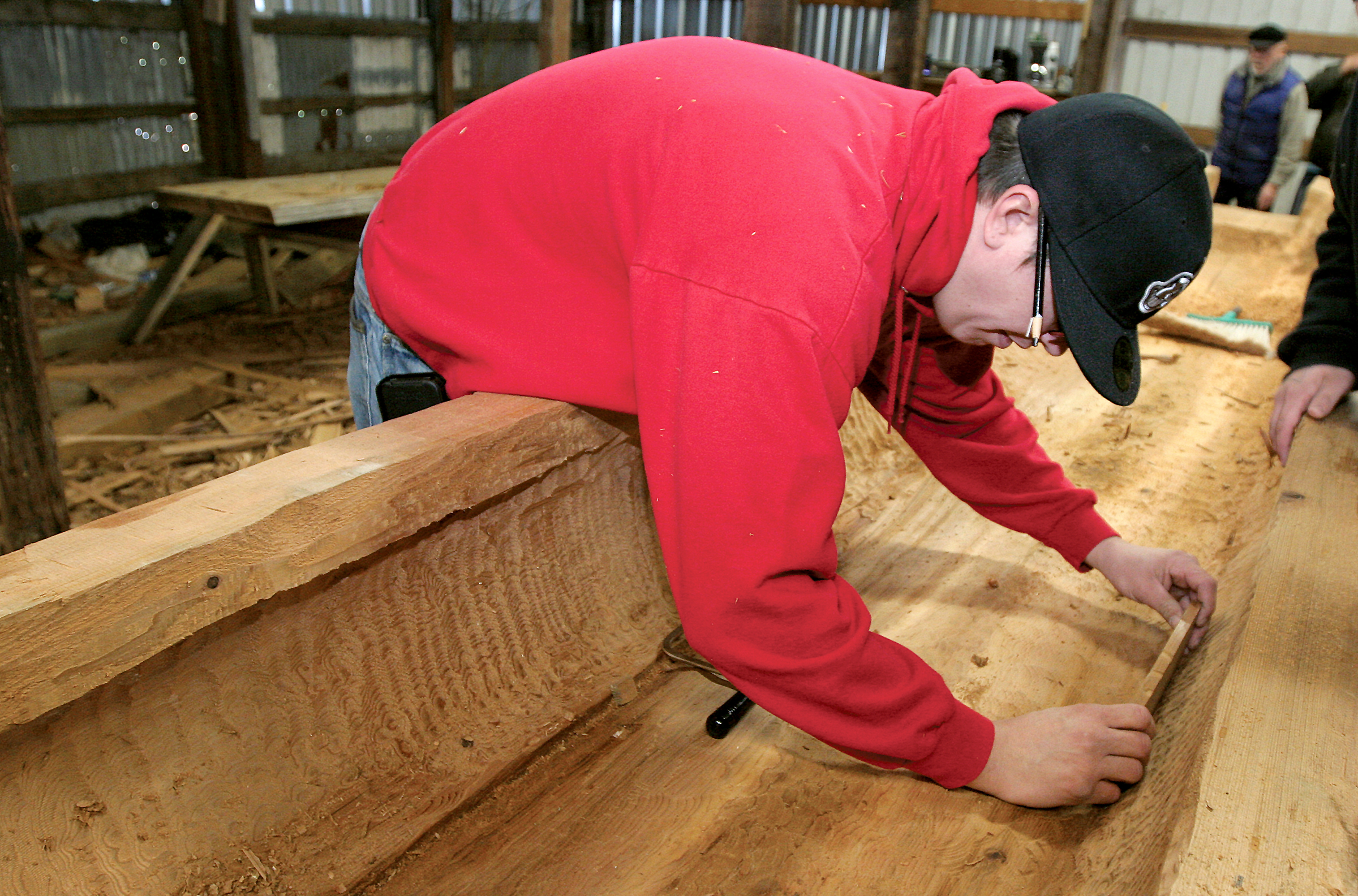
2011 — Tribal members were carving a river canoe that Cultural Education Specialist Brian Krehbiel said might have been the first one made since the Tribe arrived at the reservation in the 1800s. The Cultural Resources Department, which had researched the design, was carving the 16-foot, three-to-four-person canoe with the help of volunteers, and was also working on a larger canoe for oceans and large rivers such as the Columbia.
2006 — The Tribe participated in a ceremony to celebrate the planting of more than 10,000 native trees and shrubs as part of the ongoing cleanup of the McCormick and Baxter Superfund site in Portland Harbor.
“We want to let you know that this site is in the homeland of the Grand Ronde people,” Tribal Council Chairwoman Cheryle A. Kennedy said.
2001 — The Tribe was putting together plans for a new 25,000-square-foot educational complex. Included were buildings for Youth Education, Preschool and Head Start, Adult Education and a gymnasium/auditorium. The Adult Education building included a library.
1996 — Tribal members completed a new cedar sweatlodge, built in the traditional manner and located behind the Chemical Dependency office building. It was large enough to hold approximately 50 people.
1991 — Tribal Elders Ila Dowd and Nora Kimsey, along with other Elders and members of the Tribal Council, attended the grand opening of the Polk County Museum in Dallas and showed off a set of baskets made nearly 100 years ago.
1986 — Tribal Council Chair Mark Mercier said the council “has agreed to take time to stop to review its progress as a government and plan for the future. We know that, compared to other Tribes, we have much to learn. We believe reflecting on what has been done can help us improve in the future.” He said the council intended to continue exploring how to create a homeland and establish housing and businesses. In addition, Merceir wrote, “We plan to travel to other Indian reservations to see how they have developed and the problems they have encountered.”
Yesteryears is a look back at Tribal history in five-year increments through the pages of Smoke Signals.